
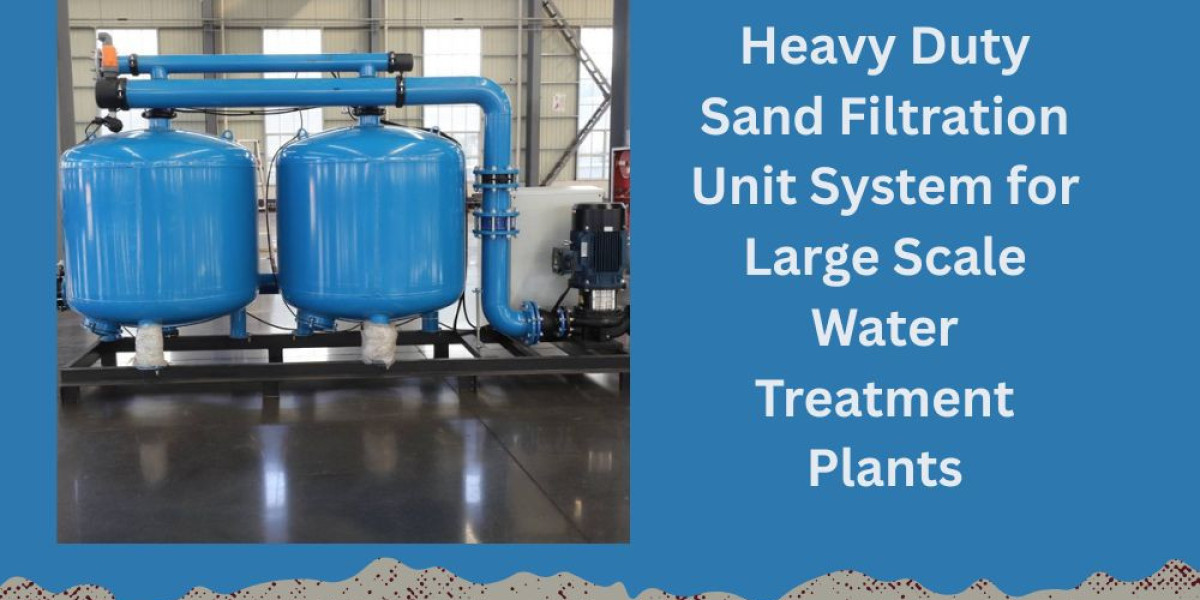
Water is the lifeblood of any growing city. When you turn on your tap to brush your teeth or fill a glass, you expect that water to be safe, clear, and clean. But before that water reaches your home, it goes through a massive journey. For large-scale water treatment plants—the kind that serve thousands or even millions of people—the "heavy lifter" of the cleaning process is often the Heavy-Duty Sand Filtration Unit.
In this guide, we will break down exactly what these systems are, how they work, and why they remain the gold standard for keeping our water supplies safe. We’ll keep things simple and focus on the real-world impact of this incredible technology.
What Exactly is a Heavy-Duty Sand Filtration Unit?
Note: The Sand Filtration Unit system in tanzania had delivered clean and clear water across multiple sectors. It was designed for durability and consistent filtration results. Industries had benefited from its efficient operation and low maintenance. Reach out to Tamgo Tanzania Limited now to get dependable water filtration solutions.
At its simplest, a sand filtration unit is a giant container filled with layers of sand and gravel. Think of it like a giant coffee filter, but instead of catching coffee grounds, it catches dirt, bacteria, and tiny particles that make water cloudy or unsafe.
In a "heavy-duty" system designed for large plants, these units are massive. They are built to handle millions of gallons of water every single day without breaking down. They aren't just boxes of sand; they are highly engineered machines that use gravity, pressure, and physics to scrub water clean.
Why Sand?
You might wonder why we use something as simple as sand in a high-tech world. The reason is that sand is natural, cheap, and incredibly effective. Each grain of sand acts as a tiny barrier. When you stack billions of these grains together, they create a complex "maze" that water can pass through, but dirt cannot.
How the System Works: Step-by-Step

Large-scale water treatment doesn't happen all at once. It’s a process. Sand filtration usually happens after the "big chunks" of dirt have already been removed.
1. Pre-Treatment (The Setup)
Before water even touches the sand, chemicals called "coagulants" are often added. These chemicals act like magnets, making tiny bits of dirt stick together to form bigger clumps called "floc." These bigger clumps are much easier for the sand to catch.
2. The Gravity Feed
In most large plants, water is pumped to the top of the filtration unit. Gravity then does the hard work. As the water sinks down through the sand, the "maze" of grains traps the dirt.
3. Deep Bed Filtration
Unlike a simple screen that only catches dirt on the surface, heavy-duty sand filters use "Deep Bed" technology. This means the dirt gets trapped throughout the entire depth of the sand, not just the top inch. This allows the system to run for a long time before it needs to be cleaned.
Different Types of Sand Filtration Systems
Not every water plant uses the exact same setup. Depending on the space available and the quality of the local water source, engineers choose between two main types.
Rapid Sand Filters (The Speed Kings)
These are the most common in big cities. They use slightly larger grains of sand and often use pumps to help push the water through faster. Because they work quickly, they take up less space. However, they need to be cleaned more often through a process called "backwashing."
Slow Sand Filters (The Natural Choice)
These are much larger and move water slowly. They don't just use physical filtering; they actually grow a thin layer of helpful bacteria on top of the sand (called a schmutzdecke). This biological layer eats harmful germs. These are great for smaller communities or places where chemicals aren't easily available.
Key Components of a Heavy-Duty Unit
To keep a massive plant running, the filtration unit needs more than just sand. It’s a complex system of parts working together.
The Underdrain System
At the very bottom of the sand tank is the underdrain. This is a series of pipes or blocks with tiny holes. Its job is to collect the clean water and send it to the next stage of treatment. It also plays a huge role in the cleaning process.
Multi-Media Layers
In modern "heavy-duty" units, it’s not just sand. We often use "Multi-Media" filtration. This might include:
- Anthracite (Coal): A light layer on top to catch the biggest dirt.
- Fine Sand: The middle layer for standard filtering.
- Gravel: The bottom layer to support the sand and keep it from falling into the pipes.
Automation and Sensors
Modern systems use computers to "watch" the water. If the water coming out starts to look a bit cloudy, or if the pressure builds up because the sand is too dirty, the computer automatically triggers a cleaning cycle.
The Cleaning Process: What is Backwashing?
Eventually, the sand gets full of dirt. If we didn't clean it, the water would stop flowing. This is where backwashing comes in.
Imagine blowing air through a straw into a glass of chocolate milk—it bubbles up and moves everything around. That’s essentially backwashing. The plant reverses the flow of water, pumping clean water up through the bottom of the sand.
- The sand grains lift and tumble.
- The dirt is shaken loose and floats to the top.
- This "dirty" water is drained away into a waste tank.
- The sand settles back down, and the filter is ready to work again.
Why Large-Scale Plants Prefer Sand Filtration
With all the new technology out there, like UV lights and high-tech membranes, why do we still use sand?
1. It is Cost-Effective
Sand is abundant and cheap. Once the concrete tanks are built, the system can last for decades with very little money spent on replacement parts compared to expensive plastic membranes.
2. It is Extremely Reliable
Sand filters don't "break" easily. There are no delicate computer chips inside the sand itself. As long as you keep the pumps working and the sand clean, it will do its job perfectly every single time.
3. High Volume Capacity
Heavy-duty units are designed for "throughput." They can clean millions of liters an hour. For a city like New York or London, you need that kind of muscle to keep up with demand.
Environmental and Health Benefits
Beyond just making water look clear, sand filtration is a hero for public health and the planet.
Removing Pathogens
Many tiny parasites, like Cryptosporidium, are resistant to chlorine. However, they are too big to fit through the gaps in a well-maintained sand filter. By physically removing these germs, we prevent massive outbreaks of stomach illnesses.
Reducing Chemical Use
Because sand does such a good job of physical cleaning, cities don't have to use as much chlorine or other harsh chemicals to kill germs later in the process. This makes the water taste better and is better for the environment when the water eventually returns to our rivers.
Challenges and Maintenance
No system is perfect. Even these heavy-duty units require a watchful eye.
Dealing with "Mud Balls"
If a filter isn't backwashed properly, clumps of dirt and sand can stick together to form "mud balls." These can sink to the bottom and ruin the filter's efficiency. Operators have to check the sand regularly to make sure it stays loose and clean.
Managing Waste Water
The water used to clean the filters (the backwash water) is very dirty. Large plants have to have a plan for where this water goes. Usually, they let the dirt settle out in a separate pond and then recycle the water back to the start of the plant.
The Future of Sand Filtration
As we move toward "Smart Cities," sand filtration is getting an upgrade. We are now seeing:
- AI Monitoring: Computers that can predict exactly when a filter will get dirty based on the weather or the season.
- Improved Media: Using recycled glass or special ceramics instead of natural sand to catch even smaller particles.
- Energy Efficiency: New pump designs that use 30% less electricity to move the water through the filters.
Summary: The Quiet Guardian of Public Health
The Tamgo Tanzania Limited might not be the flashiest piece of technology, but it is one of the most important inventions in human history. It sits quietly at the heart of our cities, working 24 hours a day to turn murky river or lake water into the clear, safe liquid we rely on.
By combining the simplicity of nature (sand and gravity) with modern engineering (automation and multi-media layers), these systems provide a sustainable, reliable, and affordable way to keep the world hydrated. The next time you drink a glass of water, remember the giant tanks of sand that made it possible.
For more insightful articles related to this topic, feel free to visit tweetchat