Light weighting is one of the defining engineering priorities of our era, and microcellular plastics sit at the intersection of material efficiency, performance, and sustainability in a way few competing technologies can match. The Microcellular Plastics Market is projected to grow from US$ 55.36 Billion in 2025 to US$ 76.91 Billion by 2034, registering a CAGR of 4.20% during the forecast period 2026 to 2034. Across aerospace, consumer goods, and home products, the appeal of a material that delivers structural integrity at significantly reduced mass and material consumption continues to broaden the addressable market for microcellular processing technology.
What Are Microcellular Plastics?
Microcellular plastics, also known as microcellular foams, are polymer materials processed to contain a uniform distribution of microscopic closed cells, typically ranging from 1 to 100 micrometres in diameter. They are produced by saturating a thermoplastic with a supercritical gas, usually carbon dioxide or nitrogen, under controlled pressure and temperature, then inducing rapid pressure drop to nucleate millions of fine cells simultaneously throughout the melt. The result is a material with a foam-like internal structure that retains much of the parent polymer's mechanical performance while reducing density by 20 to 35 percent compared to solid equivalents.
Request a Sample Copy of the Report: https://www.theinsightpartners.com/sample/TIPRE00011882
What Is Driving Demand Across the Microcellular Plastics Market?
Aerospace demand provides the highest-value pull in the microcellular plastics market. Aircraft interiors, structural cabin components, seating systems, and overhead bin panels all benefit from weight reduction that directly translates into fuel savings across tens of thousands of flight cycles. Aviation regulators impose stringent flammability and smoke toxicity requirements on interior materials, and microcellular plastics based on polycarbonate and other engineering thermoplastics have been developed to meet these standards while delivering mass savings that neither solid plastics nor traditional foam alternatives can achieve simultaneously. As aircraft production rates recover and new narrow and widebody programmes enter service, demand for certified lightweight interior materials is a consistent and well-funded market.
The consumer goods sector, encompassing toys, sporting equipment, and personal accessories, drives significant volume demand for microcellular plastics through its combination of high production rates and strong sensitivity to material cost and weight. Toy manufacturers benefit from the ability to produce lighter, more impact-resistant parts at lower material cost per unit compared to solid injection moulded equivalents. The microcellular injection moulding process, commercially known as MuCell, enables shorter cycle times and reduced clamping force requirements, which lowers per-part manufacturing cost in addition to the material savings from reduced polymer consumption. This combined economics make it commercially attractive across high-volume consumer goods production.
Home decorative and interior products represent a growing application category where microcellular plastics are displacing heavier traditional materials in decorative mouldings, picture frames, furniture components, and architectural trim. The visual finish achievable from microcellular polystyrene and PVC formulations closely mimics wood or plaster at a fraction of the weight and cost, and the material's dimensional stability and moisture resistance provide a functional advantage in residential and commercial interior applications. As construction activity remains elevated globally and interior specification trends favour lightweight, low-maintenance materials, this segment is contributing meaningfully to overall market growth.
Sustainability considerations are adding structural momentum to microcellular plastics adoption that goes beyond immediate cost and weight economics. Using 20 to 35 percent less polymer per part reduces both raw material consumption and the embedded carbon associated with producing that polymer. When combined with the ability to use recycled content in microcellular formulations without significant performance penalty, the process aligns with circular economy objectives that are now embedded in procurement policies across automotive, electronics, and consumer goods supply chains. This sustainability dimension is converting previously cost-led conversations into value-led ones in key end-use markets.
Segmentation Overview
By Type
- Polyvinyl Chloride
- Polystyrene
- Polycarbonate
- Polyethylene Terephthalate
By Application
- Aircraft
- Toys
- Home Decorative
Key Market Players
- Ingenia Polymers Corp.
- Saint-Gobain
- BASF SE
- Lavergne Performance Compounds
- General Plastics Manufacturing Company
- Rogers Corporation
- Microgreen Polymers
- Total Plastic Solutions
- INOAC Corporation
- Mearthane Products Corporation
Sustainability and Innovation Trends in Microcellular Plastics
The use of supercritical CO₂ and nitrogen as foaming agents rather than chemical blowing agents eliminates the residual VOC and odour concerns associated with traditional foam processing, a compliance advantage that is becoming commercially significant as indoor air quality standards tighten in automotive interiors and building materials. Development of bio-based thermoplastic feedstocks compatible with microcellular processing is progressing, with polylactic acid-based microcellular foams demonstrating commercial potential in packaging and consumer goods applications where composability or bio-content claims support brand positioning. Process innovation is focused on extending microcellular technology to a wider range of engineering thermoplastics, including high-performance polymers such as PEEK and PEI, which would open aerospace structural and medical device applications currently beyond the reach of existing microcellular systems.
Buy Premium Report: https://www.theinsightpartners.com/buy/TIPRE00011882
Regional Outlook
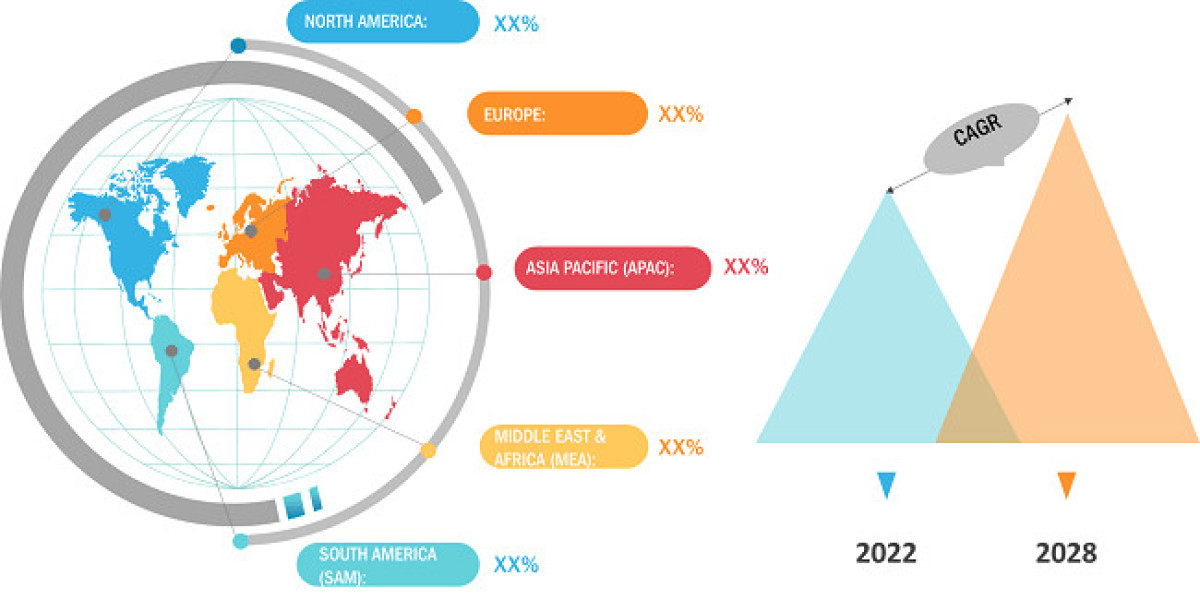
North America is the leading regional market, anchored by a world-class aerospace manufacturing base, a large consumer goods production industry, and strong technology development activity around microcellular processing equipment and materials. The United States houses the principal MuCell technology licensor and a dense network of aerospace-certified foam and microcellular component producers.
Europe follows closely, driven by Airbus supply chain demand, automotive lightweighting programmes, and a sophisticated home product manufacturing sector in Germany, Italy, and the Nordic countries. Asia Pacific is the fastest-growing region, with China, Japan, and South Korea driving demand through their dominant positions in consumer goods, electronics, and automotive component manufacturing, and India emerging as a growing production and consumption market for lightweight plastic components across multiple end-use categories.
Related Reports:
Thermoplastic Vulcanizate (TPV) Market
About The Insight Partners
The Insight Partners is among the leading market research and consulting firms in the world. We take pride in delivering exclusive reports along with sophisticated strategic and tactical insights into the industry. Reports are generated through a combination of primary and secondary research, solely aimed at giving our clientele a knowledge-based insight into the market and domain. This is done to assist clients in making wiser business decisions. A holistic perspective in every study undertaken forms an integral part of our research methodology and makes the report unique and reliable.
Contact Us:
If you have any queries about this report or if you would like further information, please contact us:
Phone: +1-646-491-9876
E-mail: sales@theinsightpartners.com
Also Available in: Korean | German | Japanese | French | Chinese | Italian | Spanish